
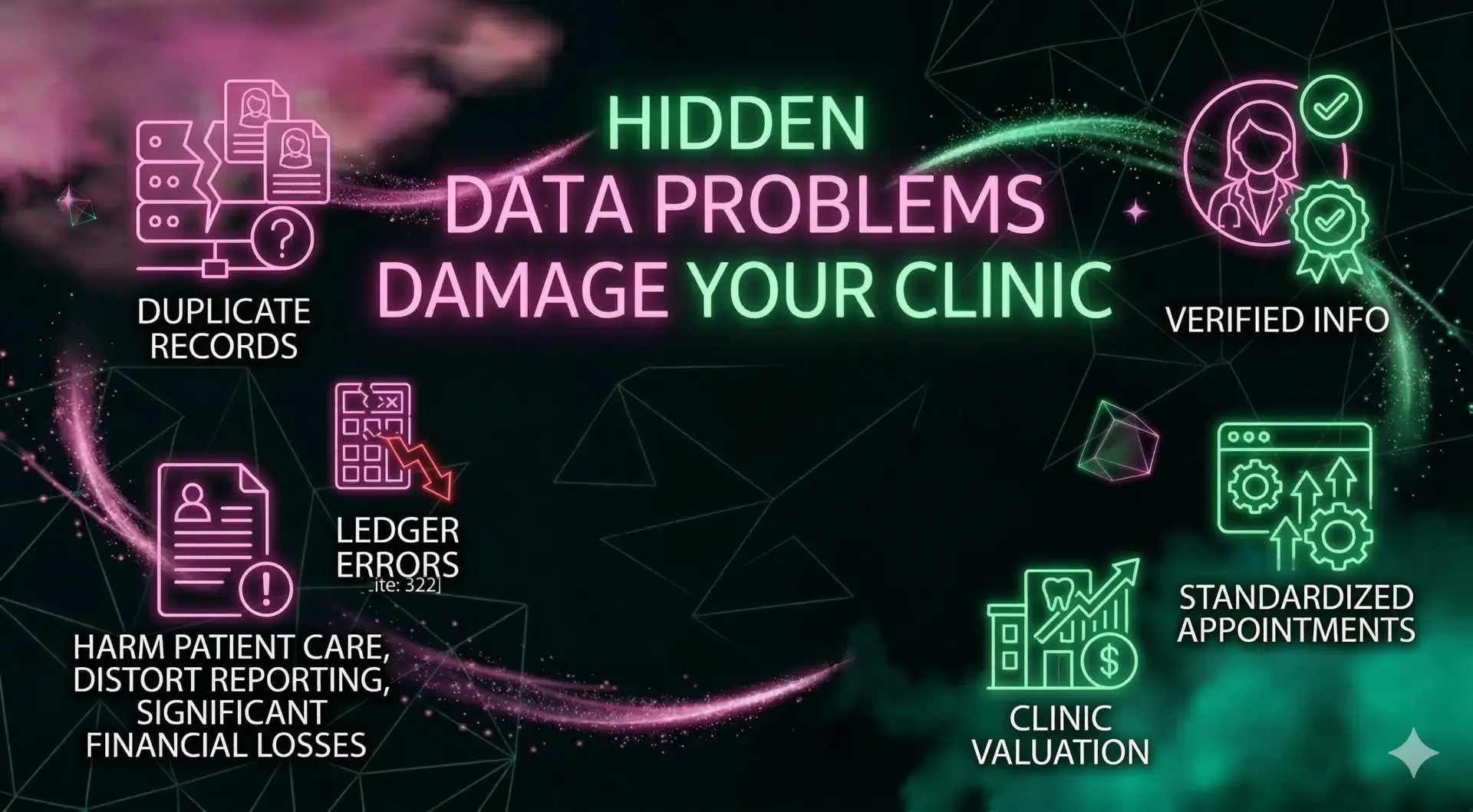
Data issues in dental clinics don’t usually appear all at once—they accumulate slowly. When left unchecked, they distort reporting, frustrate staff, harm patient care, and lead to significant financial losses. This listicle breaks down the ten most common and most damaging data problems found in dental offices, explains why each one matters, and outlines what clinics can do to correct them.
1. Duplicate Patient Records
Why it’s a problem: Duplicates inflate active patient counts, corrupt reporting, and cause missed or double-booked appointments.
Impact: Billing errors, rejected claims, hygiene overdue inflation, and lost follow-up.
Fix: Merge duplicates monthly and enforce strict naming conventions.
2. Missing or Incorrect Insurance Details
Why it’s a problem: Small errors (wrong policy number, outdated plan dates) lead to rejected claims and delayed treatment.
Impact: Increased A/R, patient frustration, and rework for admin staff.
Fix: Verify insurance annually and restrict free-typing carrier names.
3. Incomplete Contact Information
Why it’s a problem: Patients cannot be recalled, reminded, or contacted about treatment.
Impact: Lower recall rates, higher no-shows, increased overdue hygiene.
Fix: Verify email, mobile, and address at every visit.
4. Outdated Recall Dates
Why it’s a problem: Incorrect recall intervals or dates break the preventive care cycle.
Impact: Patients fall through cracks, leading to missed hygiene appointments and worse clinical outcomes.
Fix: Standardize recall intervals and update ‘next call’ dates after every outreach attempt.
5. Unfinished or Incorrect Clinical Notes
Why it’s a problem: Missing notes cause clinical risk, legal exposure, and billing inconsistencies.
Impact: Lost revenue from unsigned procedures, difficulty auditing histories.
Fix: Lock all notes daily and audit weekly for incomplete entries.
6. Unscheduled Treatment Piling Up
Why it’s a problem: Treatment sits unscheduled due to data entry delays or inconsistent coding.
Impact: Worsening dental conditions, lost production, and declining case acceptance.
Fix: Review unscheduled treatment lists weekly and enforce proper diagnostic coding.
7. Ledger Errors and Incorrect Adjustments
Why it’s a problem: Undocumented write-offs and mismatched payments distort financial accuracy.
Impact: Unreliable A/R aging and misleading revenue reporting.
Fix: Set clear adjustment codes and audit ledgers monthly.
8. Inconsistent Use of Appointment Reasons
Why it’s a problem: Free-typed appointment reasons destroy reporting accuracy.
Impact: Impossible to measure demand, hygiene capacity, or production forecasting.
Fix: Enforce standardized appointment reason codes.
9. Inaccurate Provider Assignment
Why it’s a problem: Wrong provider = wrong billing, wrong production numbers, and insurance issues.
Impact: Skewed KPI reporting and underperformance misinterpretation.
Fix: Train staff on assigning the correct provider for each procedure and appointment.
10. Aging Insurance Claims with No Follow-Up
Why it’s a problem: Claims not followed up within 30 days often never get paid.
Impact: A/R ballooning, cash flow problems, frustrated patients.
Fix: Check insurance aging weekly and investigate claims over 30 days old.
Comments are closed