
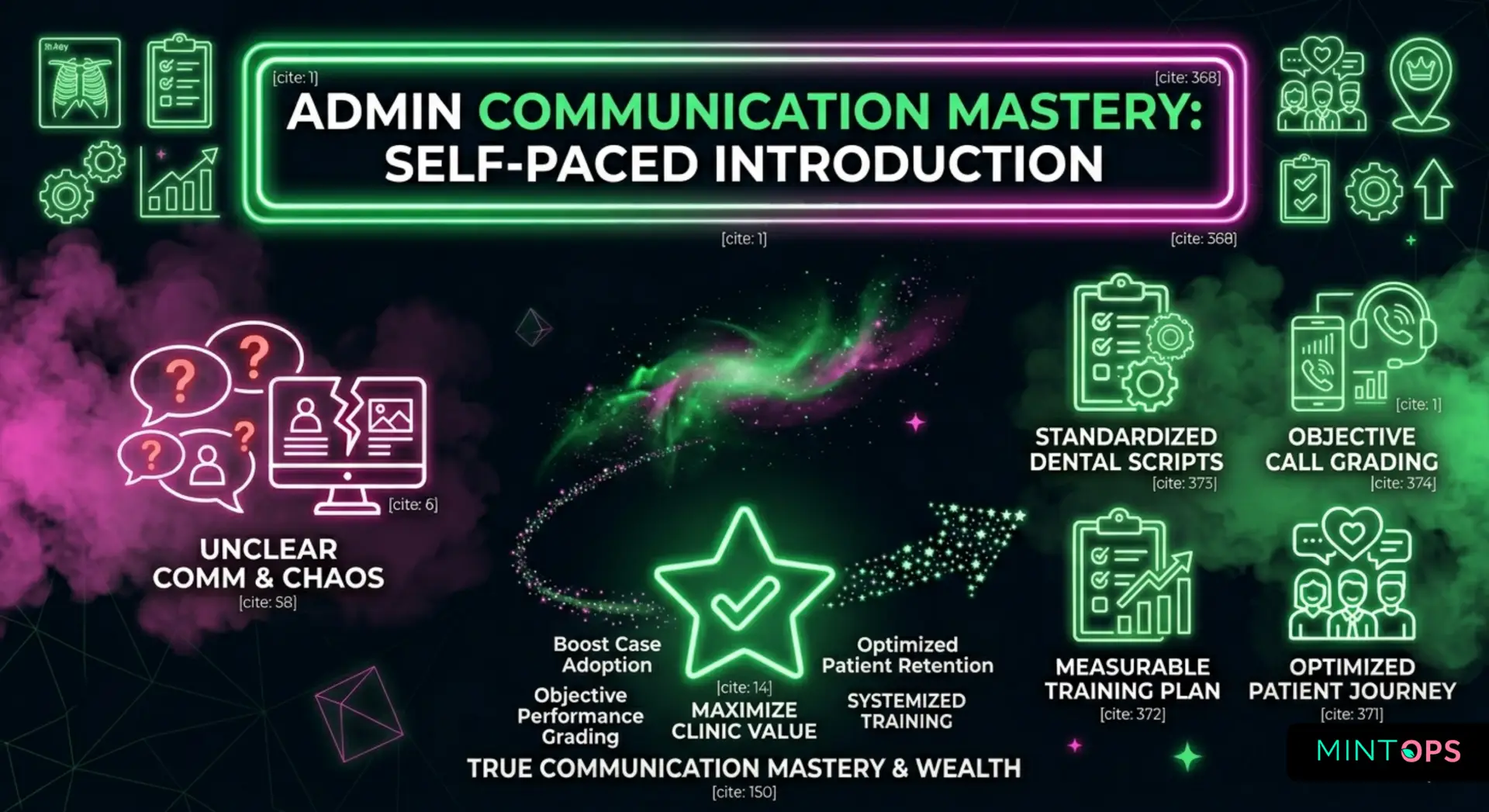
This course is designed to train dental administrative professionals in effective patient communication. The lessons are written in plain language, and are meant to be used as a self-paced training resource. Each lesson includes a short quiz to help reinforce learning.
Lesson 1 – Foundations of Communication
Front desk communication sets the tone for the entire patient experience. Every successful call follows a natural structure:
1. Start with a warm greeting.
2. Ask questions to understand why the person is calling.
3. Reassure the caller and let them know you can help.
4. Guide them toward the next step.
5. Confirm details before ending the call.
Clear tone, calm pace, and avoiding dental jargon all contribute to patient comfort. Using the patient’s name and showing genuine interest helps build trust quickly.
Lesson Quiz:
1. What comes after understanding the caller’s needs? (Answer: Reassurance)
Lesson 2 – New Patient Calls
New patient calls are an opportunity to make a strong first impression. There are three common types:
General inquiries:
– Ask what they are looking for.
– Clarify whether this is a check-up, cleaning, or specific concern.
– Reassure them that the clinic can assist.
– Offer to book an appointment.
Emergency calls:
– Begin with empathy.
– Ask about symptoms such as pain, swelling, or fever.
– Offer the soonest available appointment.
Price-shopping calls:
– Avoid quoting exact fees.
– Explain that fees follow the provincial guide.
– Encourage booking an exam so the dentist can provide accurate information.
Lesson Quiz:
1. What should you ask first on a tooth pain call? (Answer: Whether the pain is constant or intermittent)
Lesson 3 – Recall and Treatment Follow-Up
Outbound calls are used for recall and treatment follow-up.
Recall calls:
– Keep the tone friendly and relaxed.
– Offer two appointment options.
– If the patient is unsure, suggest booking a placeholder.
Treatment follow-up:
– Remind the patient of the treatment discussed.
– Ask if they have any questions.
– Determine whether their concern is timing, cost, or the procedure itself.
– Offer to reserve a time that can be changed later.
Lesson Quiz:
1. What is an appropriate suggestion for a hesitant patient? (Answer: Book a placeholder appointment)
Lesson 4 – Cancellations and No-Shows
Cancellations and no-shows affect the clinic schedule.
Same-day cancellations:
– Acknowledge politely.
– Explain that the reserved time is difficult to fill.
– Ask if they would like to reschedule.
– Mention the cancellation policy when appropriate.
No-shows:
– Call or leave a message expressing concern.
– Invite the patient to rebook.
The goal is to remain respectful while protecting the schedule.
Lesson Quiz:
1. What is the purpose of a no-show call? (Answer: To check on the patient and rebook)
Lesson 5 – Insurance and Financial Discussions
Insurance questions are common and require careful communication.
When asked whether the clinic accepts an insurance plan:
– Explain that many patients with that plan are seen at the clinic.
– Clarify that every plan is different.
– Encourage booking an appointment.
When asked how much insurance will cover:
– Avoid giving exact numbers.
– Provide an estimate when possible.
– Suggest a pre-determination for accuracy.
Lesson Quiz:
1. Why shouldn’t you guarantee insurance amounts? (Answer: Every plan is different and cannot be confirmed without verification)
Lesson 6 – Managing Difficult Calls
Difficult calls require patience and empathy.
When speaking with an upset caller:
– Listen without interrupting.
– Acknowledge their feelings.
– Ask what happened and what they feel would be fair.
– Explain what steps you can take.
Staying calm helps diffuse frustration and build trust.
Lesson Quiz:
1. What is the first step with an angry caller? (Answer: Acknowledge their feelings and listen)
Final Assessment
1. List the five steps of an effective phone conversation.
2. What should you ask first in an emergency call?
3. Why should exact prices generally not be given over the phone?
4. What can you offer a hesitant recall patient?
5. Why is it important not to guarantee insurance coverage amounts?
6. How should you begin a call with an upset patient?
Comments are closed